Three years in: the journeyman ticket that paid off, and the one that didn't
Two electricians, same apprenticeship class, same wage at graduation. One is making forty percent more three years later. The difference wasn't talent — it was a single decision about where to start.
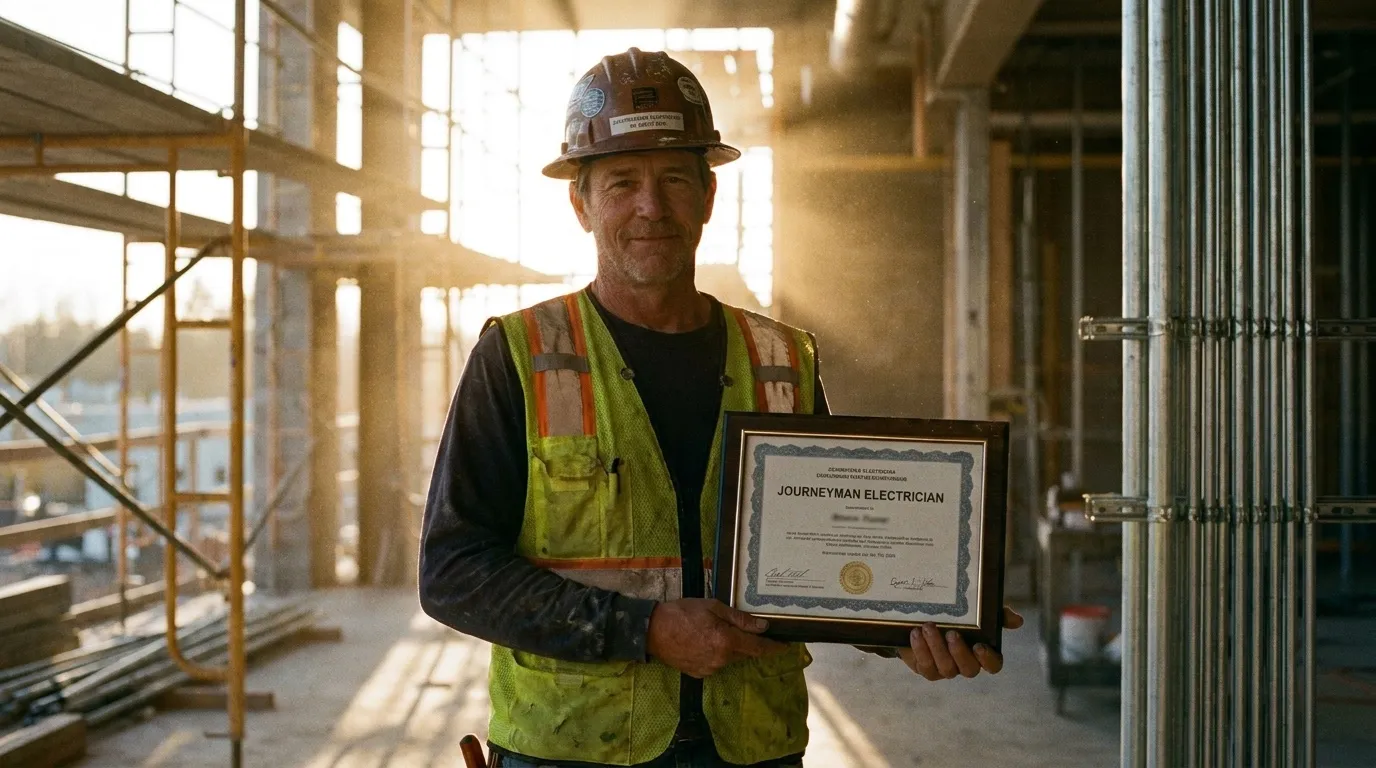
When Marcus and David walked out of their IBEW Local 11 apprenticeship in 2023, they had identical credentials, identical journeyman cards, and identical starting wages. Three years on, Marcus is making forty percent more than David. Both are working hard. Both are well-regarded by their employers. The difference, when we sat down with both of them this spring, came down to a single decision they made in their first year as journeymen — and Marcus was the first to say he got lucky as much as he got it right.
David took the first solid offer he got out of graduation: a residential contractor in the San Fernando Valley, steady work, twenty minutes from his house, decent crew. He’s still there. The pay has tracked the union scale with modest merit raises — he’s currently at $52 an hour with full benefits, which is a real living in 2026 and which he’s clear-eyed about being grateful for.
Marcus took longer to land. He turned down two residential offers because he wanted commercial work, and spent six weeks living off his last apprentice paycheck before a foreman he’d worked with on a school job called him about a position with a mid-sized industrial contractor running data-center buildouts. The starting wage was lower than David’s — $46 an hour — but the differential pay on night shifts, the per diem on out-of-state work, and the structured advancement path put him on track immediately.
Three years on, Marcus is at $73 an hour base plus a $35/day per diem on most jobs, and he’s a regular foreman with a clear path to general foreman by 2027. The compounding effect is the part both of them think about most. “If I’d taken the residential job,” Marcus told us, “I’d be making about what David’s making. He’d be making about what I’m making if he’d taken the call he didn’t take in 2024.” David is the one who said that — Marcus didn’t.
The lesson isn’t that one path is better than the other. Both men are happy with the work. The lesson is that the first job after graduation does most of the work of setting the trajectory, and the trades culture of “take the work that’s in front of you” is not always the right advice. There’s nothing wrong with waiting six weeks for the right call. There’s also nothing wrong with taking the steady job that’s twenty minutes from your house. The thing that’s worth taking seriously is that the two decisions look identical at the time and don’t look identical at all three years later.
We’ll be following Marcus and David through the rest of 2026.